
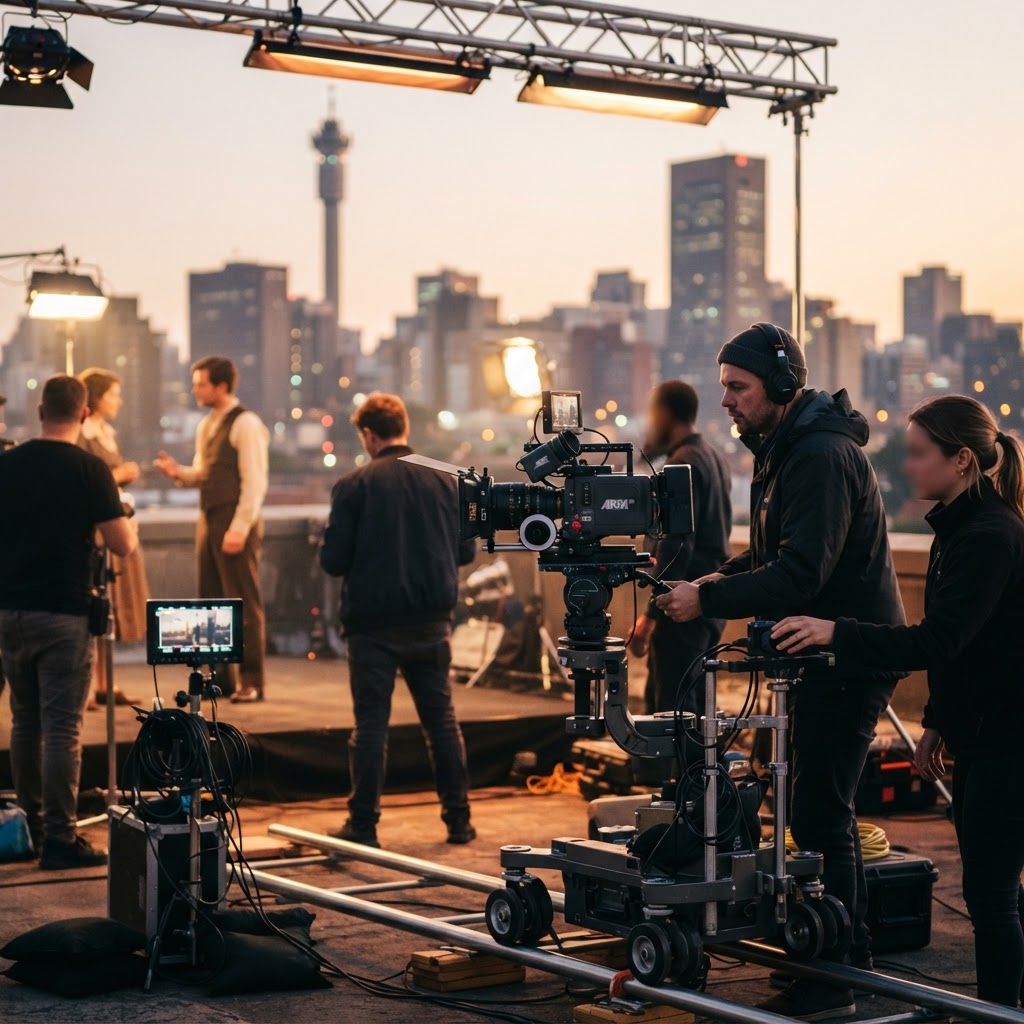
The global streaming landscape has officially undergone a shift in gravity, with South African storytelling standing firmly at the centre. For the past two months, the isiZulu production The Polygamist has maintained a relentless grip on the international consciousness, securing a spot in the top 10 charts across 62 nations. With viewer numbers approaching the 28 million mark since its mid-year debut, the series has proven that audiences abroad are no longer just passive observers of international content—they are actively hungry for the nuances of local narratives. This is not merely a transient trend; it represents a fundamental revaluation of South African creative talent. The success of this specific project has dismantled long-held myths that authentic, culturally rich content cannot travel across borders. Instead, the raw linguistic and emotional resonance of our stories has become a commodity that global audiences are desperate to consume. Netflix has moved swiftly to capitalise on this momentum, signaling a major ramp-up in their local development strategy. By greenlighting continuations of audience favourites like Blood Legacy and the sequel to Seriously Single, the platform is doubling down on the premise that South African voices provide a unique value proposition. Furthermore, the diversification into local reality formats such as the anticipated Love Is Blind: South Africa suggests an intent to capture every facet of our social fabric for international display. For those within the local production ecosystem, these developments translate into tangible stability. Since 2016, the streaming giant has hosted a catalogue exceeding 300 homegrown titles, which has been the primary engine for the creation of roughly 8,000 jobs. This influx of capital and production infrastructure is vital for a country where the creative economy often struggles with funding gaps and resource scarcity. Every set built, every script written, and every technician hired represents a strengthening of our domestic industry’s backbone. The economic ripple effect extends well beyond the studio walls, benefiting vendors, hospitality services, and the myriad support businesses that keep our film sets operational. What matters most for us, however, is the cultural sovereignty being exercised. When our languages, our social complexities, and our specific urban and rural struggles are reflected on a screen viewed from Tokyo to Toronto, it validates our reality. We are no longer relying on external interpretations of our identity; we are exporting our own perspectives to the world. As these production pipelines expand, the challenge moving forward will be ensuring that this growth remains inclusive and representative of the full breadth of our nation. The current boom should serve as a launchpad for local creators to maintain creative control while tapping into the logistical muscle provided by global distributors. If the last seven weeks have taught us anything, it is that the world is ready to listen to what we have to say. By positioning our stories as the next frontier of global entertainment, South Africa is securing its place not just as a location for filming, but as a premier creative hub. The future of our television sector is looking brighter than ever, and the global audience is waiting for our next chapter.
About the Author
Sipho Dlamini
Staff Reporter
Sipho Dlamini reports for National Post UK with a focus on rigorous analysis and authoritative journalism — a trusted voice across British public life.
Reader Discussion · 5
Subscribers can join the conversation.
SUBSCRIBE TO COMMENT →Streaming platforms are finally realising that global audiences are hungry for authentic local perspectives. It proves that a strong script in any language can resonate if the human themes are universal.
I am not sure I buy into the hype. I started watching it because of the charts, but the pacing felt a bit alien to what I am used to on British television.
This isn't just a trend, it is the result of decades of incredible theatre and literature coming out of Johannesburg and Cape Town. We have been sleeping on these narratives for far too long.
I have noticed the shift in Netflix's catalogue lately. While it is great for diversity, I do find the subtitles a bit distracting when I am trying to watch something while cooking dinner.
It is absolutely brilliant to see South African storytelling getting the global recognition it deserves. The Polygamist was such a refreshing change of pace from the usual Hollywood formula.