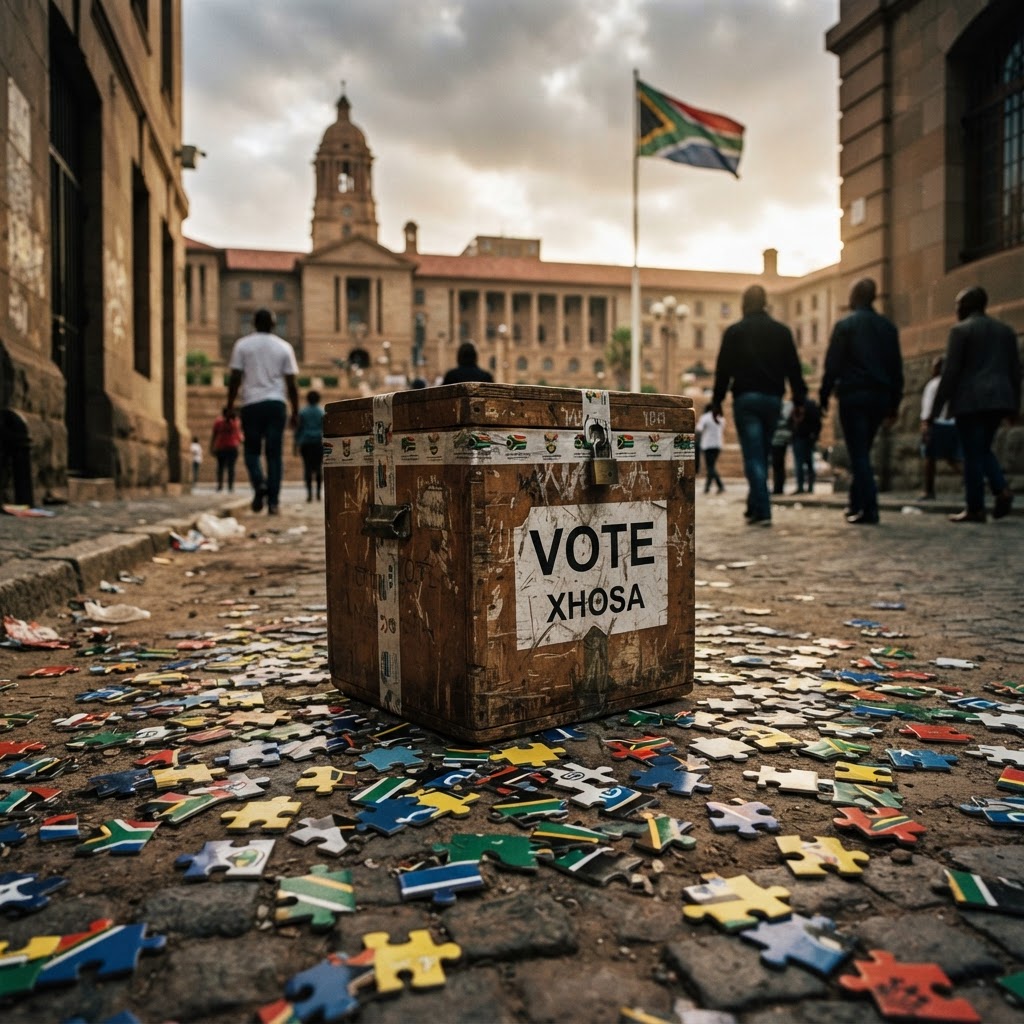
The political ground beneath South Africa is shifting with unprecedented velocity. As eyes turn toward the impending local government contests, a quartet of independent surveys paints a stark portrait of a nation in transition. The hegemony that once defined the ruling African National Congress (ANC) is eroding, with data revealing a loss of at least six percentage points since the last national ballot. For a party that has steered the ship of state for three decades, this slide is not merely statistical; it represents a profound rupture in the relationship between the governing movement and the electorate. The most acute tremors of this decline are being recorded in the country’s industrial heartlands. In major urban centers such as Johannesburg and Tshwane, the governing party is experiencing a collapse that threatens its very relevance in municipal management. This is not a gradual cooling of support but a sharp, decisive retreat. As citizens grapple with crumbling infrastructure and persistent service failures, the electoral appetite for a change in stewardship has reached a fever pitch. While the ruling party faces headwinds, the Democratic Alliance is charting a trajectory of sustained expansion. The main opposition appears to be successfully absorbing the disillusionment of voters who are abandoning the status quo in search of greater technical competence and administrative stability. Meanwhile, the uMkhonto weSizwe party, which initially burst onto the scene with disruptive force, now appears to have hit a ceiling. The momentum that defined their entrance has stalled, leaving the party struggling to broaden its reach beyond its initial core of support. Perhaps the most intriguing takeaway from this polling data is the pragmatic shift in voter sentiment regarding governance structures. A resounding majority of nearly 70% of respondents expressed support for cooperative arrangements between the ANC and the DA in municipalities where no single party commands an outright majority. This reflects a maturation of the South African voter, who increasingly prioritizes functional service delivery over the ideological purity of political brands. It is a tacit acknowledgement that the days of absolute, unilateral control are effectively over. This transformation is not merely an academic exercise for political analysts. It carries immense, direct implications for every South African household. Municipalities are the primary interface between the citizen and the state; they manage the water, the lights, and the roads that define daily life. As these local government entities move from single-party rule into an era of forced collaboration, the complexity of decision-making will increase. Coalition negotiations, while often fraught with friction, are becoming the unavoidable reality of our democracy. For the average resident, this means that the forthcoming elections are not just about choosing leaders, but about choosing a method of governance. The era of the dominant party is drawing to a close, replaced by an ecosystem where compromise is the only currency that buys progress. Whether this new arrangement will translate into the tangible improvements citizens demand remains the ultimate test of our evolving political system. As the campaign trails heat up, parties would be wise to heed these numbers: the electorate is no longer giving blank cheques, and the future belongs to those who can master the art of working together to fix the country's most pressing local crises.
About the Author
Thabo Ndlovu
Staff Reporter
Thabo Ndlovu reports for National Post UK with a focus on rigorous analysis and authoritative journalism — a trusted voice across British public life.
Reader Discussion · 5
Subscribers can join the conversation.
SUBSCRIBE TO COMMENT →Coalition politics are notoriously difficult to manage, as we have seen in many other democracies. A shift in support is one thing, but stability in governance is quite another.
It is about time that the voters started demanding more accountability. Perhaps some healthy competition at the ballot box is exactly what is needed to shake things up.
While the decline in support is measurable, we should be cautious about assuming a total collapse. The ANC still possesses a massive organisational machine that should not be underestimated.
I have family in Johannesburg who say the reality on the ground is even worse than the polls suggest. People are simply tired of the lack of service delivery and the constant scandals.
It has been clear for some time that the electorate is becoming disillusioned with the status quo. Whether this translates into a functional alternative government is the real question for the country.