
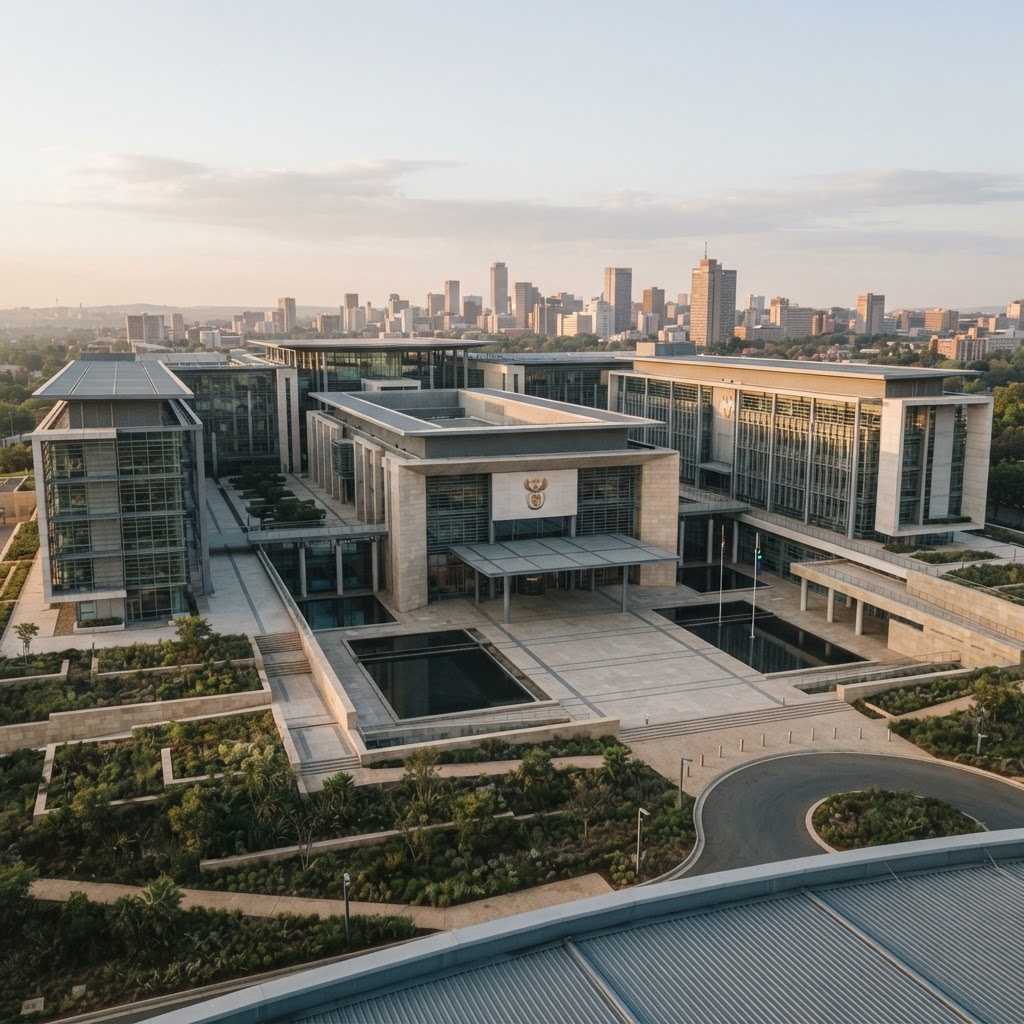
South Africa’s executive leadership has officially thrown its weight behind the 2026 Medium-Term Budget Policy Statement, marking a decisive shift toward addressing the suffocating economic pressure currently felt by ordinary citizens. Minister in the Presidency Khumbudzo Ntshavheni emphasized that the administration’s primary focus remains on shielding households from the relentless rise in basic living expenses. The policy, delivered by Finance Minister Enoch Godongwana, serves as the government's primary fiscal blueprint for navigating a turbulent economic climate characterized by persistent inflationary headwinds. At the heart of this strategy lies a tactical decision to provide temporary relief via the fuel levy, a move the administration hopes will act as a buffer against broader systemic price hikes. This intervention is not merely a temporary patch but a strategic maneuver intended to prevent transport costs from spiraling further, which would have inevitably triggered a cascade of price increases on essential goods. The South African National Taxi Council has already signaled its approval of the adjustment, noting that the relief provides a much-needed breathing space for the public transport sector. By preventing an immediate surge in fare prices, the government aims to keep the cost of commuting manageable for the millions who rely on minibus taxis daily. This focus on transport stability is particularly significant given that fuel prices remain a major driver of domestic inflation. Beyond the technical figures, the budget reflects a government acutely aware of the fragility of the post-pandemic economic recovery. Officials have described the roadmap as a balancing act, attempting to reconcile the need for fiscal discipline with the urgent requirement for social protection. Economists are watching closely to see if these measures will be sufficient to curb the erosion of disposable income, as many South Africans continue to struggle with high interest rates and stagnant wage growth. The policy also highlights the broader structural challenges the state faces, including the necessity of maintaining service delivery while debt servicing costs continue to command a significant portion of the national revenue. For the average family in townships and suburbs alike, the success of this budget will be measured not in macroeconomic indicators, but in the cost of a loaf of bread and the affordability of a commute to work. While the relief provided by the fuel levy adjustment is expected to be finite, the government maintains that it is a vital step toward long-term stabilization. The narrative from Pretoria is clear: the current administration believes that by stabilizing the most volatile sectors of the economy, it can pave the way for a more sustainable growth trajectory. As the country moves into the next phase of the fiscal year, all eyes will be on whether these targeted interventions can meaningfully shift the dial for the nation's most vulnerable. Ultimately, this statement functions as a declaration of intent, signaling that the state is actively seeking to mitigate the hardships that have defined the past year. Whether this roadmap will hold up under the pressure of global market shifts remains to be seen, but for now, it represents a concerted attempt to provide a measure of fiscal relief to a populace weary of economic uncertainty.
About the Author
Fatima Mokoena
Staff Reporter
Fatima Mokoena reports for National Post UK with a focus on rigorous analysis and authoritative journalism — a trusted voice across British public life.
Reader Discussion · 6
Subscribers can join the conversation.
SUBSCRIBE TO COMMENT →I am interested to see how they balance this against the demands of the international credit rating agencies. It is a very fine tightrope they are walking between relief and fiscal responsibility.
The issue is that we have heard these promises before while the cost of living continues to spiral. I hope this policy shift actually translates into cheaper energy and food prices.
As a small business owner, I am cautiously optimistic. Reducing the regulatory burden alongside fiscal adjustments would go a long way in helping us hire more staff.
The roadmap is a step in the right direction, but fiscal discipline in the public sector is non-negotiable if this is to work. We need to see significant cuts in departmental waste first.
This sounds like another case of political posturing without a concrete plan for implementation. I remain highly sceptical until they release the specific tax relief measures.
It is about time the government acknowledged the state of the economy. I will believe it when I see the actual relief on my monthly bills.