
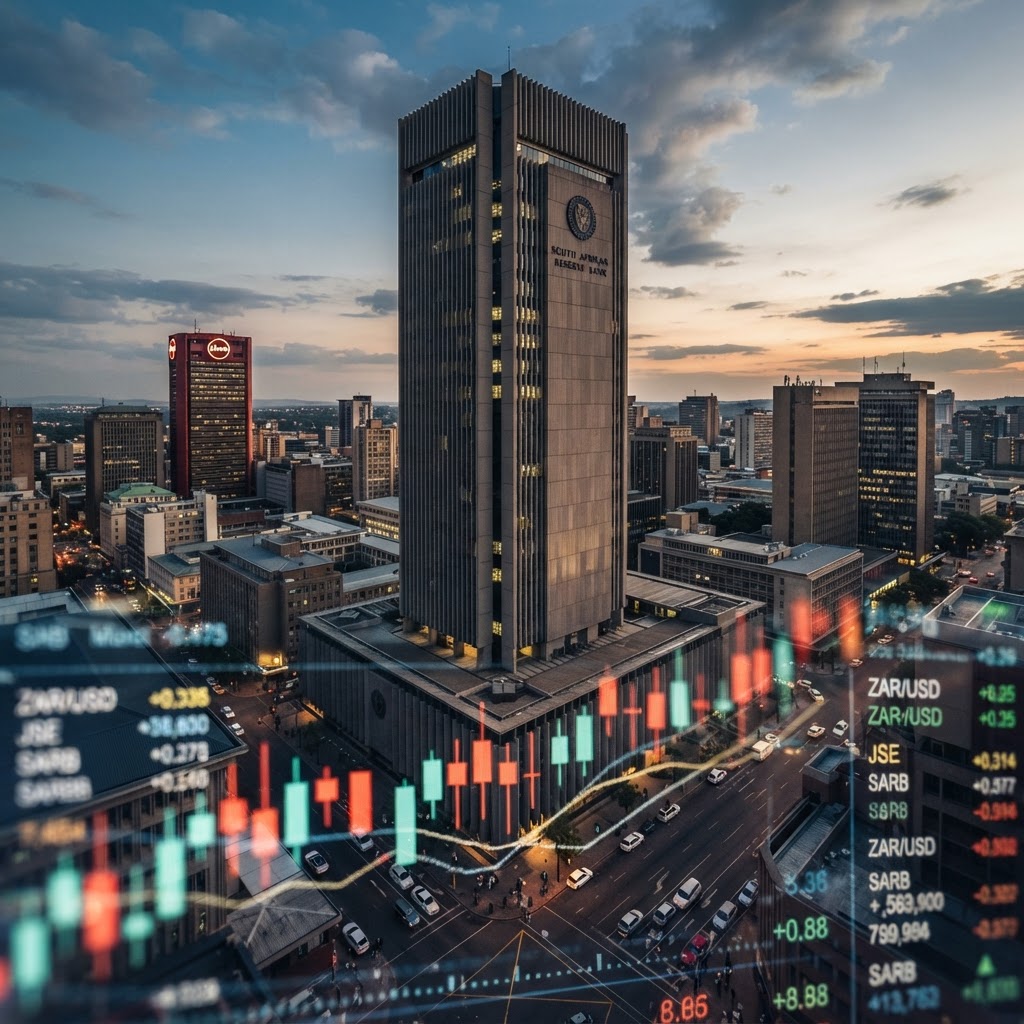
The South African Reserve Bank has officially joined the global pivot toward tighter monetary policy, lifting the benchmark repo rate by 25 basis points to 7.25 percent. This long-anticipated move marks a pivotal moment for the country’s financial stability as officials contend with a volatile external environment and domestic price shocks. For many, the decision signals an end to the era of cheap credit that sustained households through the initial stages of the recovery. Governor Lesetja Kganyago’s announcement underscores the central bank's firm resolve to anchor inflation expectations firmly within its target band. With the repo rate climbing, the cost of servicing existing debt—ranging from home loans to vehicle financing—is set to rise immediately. This adjustment, while painful for the average consumer, is framed by the Reserve Bank as a necessary prophylactic measure against the erosion of purchasing power. The primary catalyst for this shift is the resurgence of inflationary pressure, largely imported through escalating energy costs and volatile commodity markets. As fuel prices continue to surge, the bank remains concerned that these costs will permeate the broader supply chain, creating a durable upward trend in consumer prices. By acting now, the central bank aims to prevent a scenario where inflation spirals out of control, necessitating even harsher interventions in the future. The decision is also influenced by the aggressive monetary tightening cycles seen in major developed economies, which have left emerging markets like South Africa increasingly vulnerable to capital outflows. When global interest rates rise, investors frequently move funds toward safer, higher-yielding assets, putting significant downward pressure on the rand. A weaker local currency effectively imports more inflation, forcing the Reserve Bank into a defensive posture to protect the country’s macroeconomic health. Critics of the hike argue that increasing borrowing costs during a period of sluggish economic growth could stifle local businesses and deter crucial capital investment. Indeed, higher interest rates serve as a brake on both household consumption and commercial expansion, potentially dampening the nation's fragile recovery trajectory. With unemployment figures remaining stubbornly high, the timing of this policy shift is particularly delicate. Nonetheless, the monetary authorities maintain that a failure to act would risk long-term financial instability, which would prove far more damaging to the poorest South Africans than a temporary period of tighter credit. Looking ahead, the path for interest rates remains highly data-dependent. If global supply chain bottlenecks ease and domestic inflation shows signs of cooling, the central bank may pause further hikes later this year. However, if the current inflationary trend persists, borrowers should brace themselves for additional rounds of monetary tightening in the coming months. Ultimately, the Reserve Bank’s decision reflects a difficult balancing act: sacrificing short-term economic momentum to ensure long-term stability and fiscal credibility in a turbulent global landscape.
About the Author
Thabo Ndlovu
Staff Reporter
Thabo Ndlovu reports for National Post UK with a focus on rigorous analysis and authoritative journalism — a trusted voice across British public life.
Reader Discussion · 4
Subscribers can join the conversation.
SUBSCRIBE TO COMMENT →As a pensioner living on a fixed income, I have been waiting for interest rates to rise so I can actually see a decent return on my savings again. It is about time savers were considered alongside the borrowers.
I am not convinced a 25 basis point hike will do much to curb imported inflation, especially given the global supply chain pressures. It feels more like a symbolic gesture than a substantive economic remedy.
This is another blow for families already struggling with the cost of living. My mortgage payments are going to jump again, and it feels like there is no light at the end of the tunnel.
It was inevitable that the Reserve Bank would have to move eventually. While the increase is modest, it does signal a necessary attempt to get ahead of the curve before inflation becomes truly entrenched.