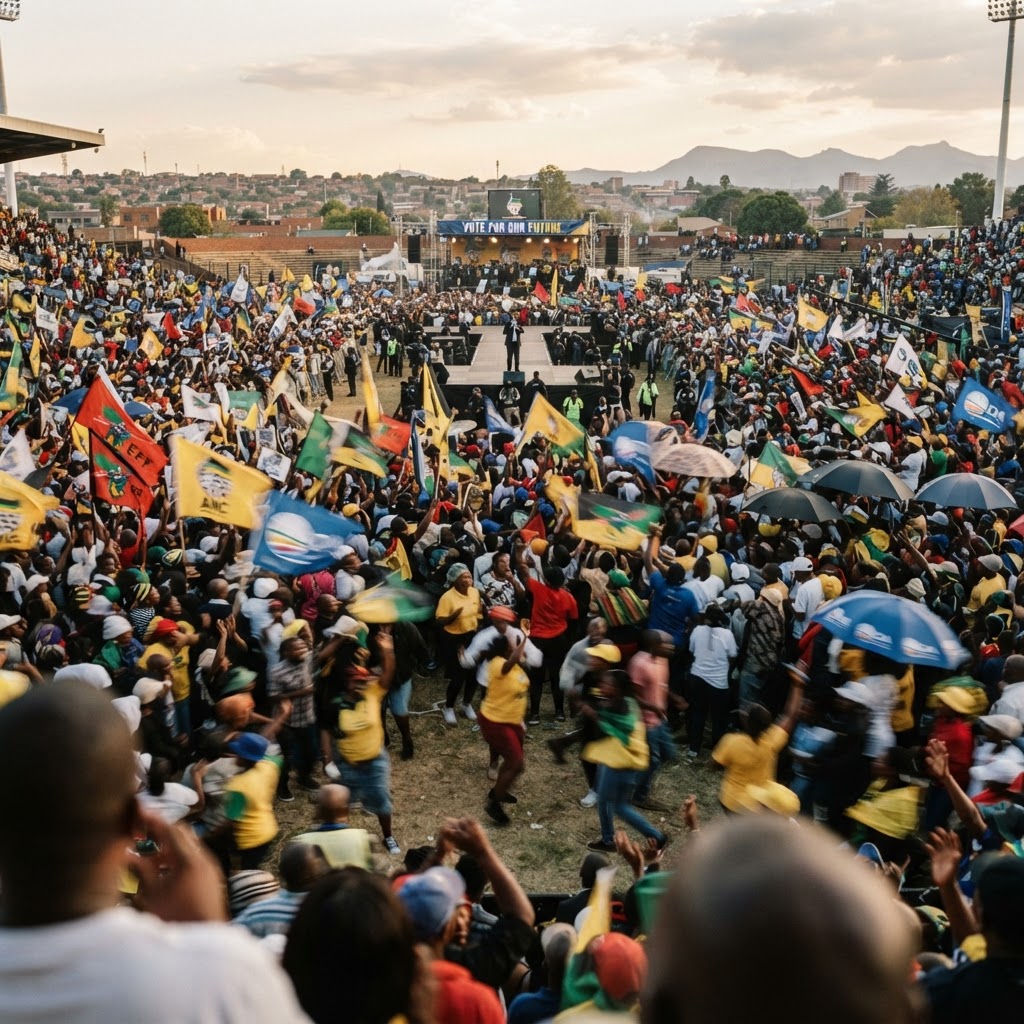
The political terrain in South Africa shifted significantly this week when the Constitutional Court overturned a previous ruling by the Electoral Court, effectively validating the African National Congress’s position regarding its participation protocols. For the governing party, which has been scrambling to solidify its base in a fragmenting political environment, this legal win serves as both a strategic relief and a much-needed morale booster. President Cyril Ramaphosa, currently traversing the country to bolster electoral confidence, was quick to frame the verdict as a validation of the party’s standing, framing the court’s decision as a necessary correction to earlier bureaucratic hurdles set by the Independent Electoral Commission. This victory is not merely a legal footnote; it is a tactical pivot point. By clearing legal obstacles, the party gains the space to aggressively consolidate its messaging in key battlegrounds, including the Western Cape, where the governing party remains locked in a desperate struggle to regain lost territory. However, the intensity of this campaign has unveiled a darker undercurrent regarding the sustainability of the ANC's leadership structure. Shortly after the jubilant celebrations following the announcement, Secretary-General Fikile Mbalula experienced a dramatic collapse, a consequence attributed by medical personnel and party spokespeople to extreme physical and psychological depletion. This incident serves as a stark metaphor for the current state of the governing party—a political machinery so heavily reliant on the relentless labor of its top brass that it is beginning to buckle under the strain. In a public show of concern, President Ramaphosa formally instructed Mbalula to step away from his duties immediately to prioritize his health. This rare public intervention highlights the internal fragility of a party that often projects an image of invincibility. For the average South African voter, the drama is deeply revealing. As households grapple with ongoing load-shedding, stagnant economic growth, and structural unemployment, the spectacle of a ruling party consumed by its own legal and physical crises underscores the vast chasm between the political establishment’s internal struggles and the daily realities of citizens. The ANC’s leadership is clearly feeling the immense pressure of an electorate that is no longer guaranteed to stay loyal. The court ruling may have cleared the path for the ballot, but it cannot fix the administrative and socio-economic cracks that define the current administration. As the election date draws closer, the party must reconcile its desire for a decisive electoral mandate with the sobering reality that its current operating pace is unsustainable. Whether this victory provides enough capital to swing undecided voters remains to be seen. What is certain, however, is that the campaign is now a test of physical endurance as much as it is a test of political ideology. With Mbalula sidelined to recover, the responsibility to maintain momentum now shifts to a thinner layer of senior officials. For a party aiming to secure a clear majority, the coming weeks will likely prove that legal victories are only as strong as the political machinery tasked with translating them into votes.
About the Author
Fatima Mokoena
Staff Reporter
Fatima Mokoena reports for National Post UK with a focus on rigorous analysis and authoritative journalism — a trusted voice across British public life.
Reader Discussion · 5
Subscribers can join the conversation.
SUBSCRIBE TO COMMENT →A win is a win for the ANC, but they would be foolish to think this settles their troubles. They need to show real results for the average citizen if they want to hold onto their majority.
I suppose the court was bound to make this decision based on the letter of the law, regardless of the political fallout. It does little to solve the chronic leadership crisis that everyone keeps talking about.
This is a significant procedural victory, certainly. Whether it translates into genuine momentum for the upcoming polls is another matter entirely given the current internal party friction.
I have family in Johannesburg who have been following this closely. They feel that while this is a win for the ANC, the underlying issues of governance and service delivery remain completely unaddressed.
It seems the judiciary is becoming far too central to the electoral process in South Africa. One has to wonder if this ruling will actually restore public trust or just entrench the current power dynamics further.