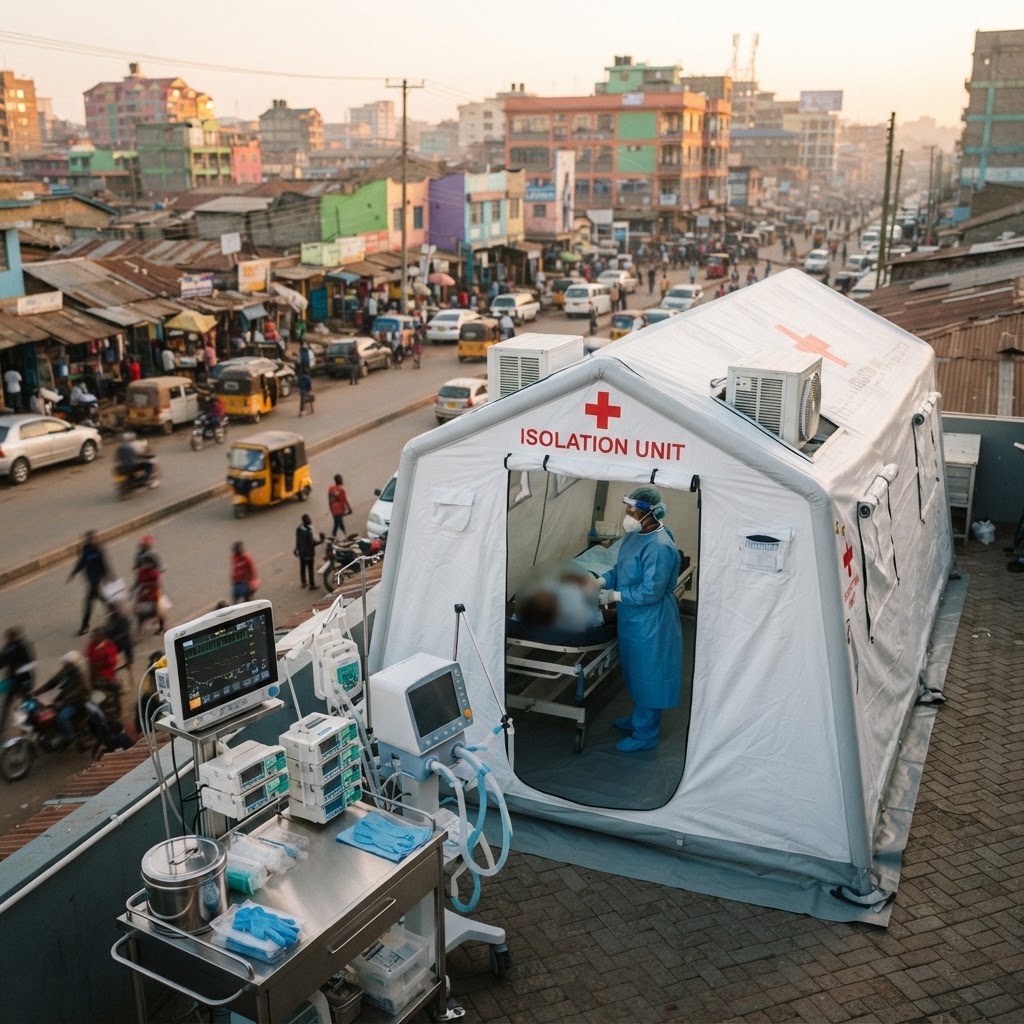
The shadow of a looming public health crisis has darkened the continent this week as Nigerian officials confirmed their maiden case of the Ebola virus. While the outbreak is currently geographically distant, the speed at which this pathogen can traverse international borders has placed the Southern African Development Community (SADC) on high alert. For a nation as globally connected as South Africa, this situation is no longer a localized West African issue; it is a matter of urgent national security. Lagos, a thriving hub of commerce and aviation, now serves as the frontline in a battle against a disease known for its devastating mortality rates. The confirmation has immediately triggered a chain reaction of public health safeguards. In an attempt to snap the chain of transmission, local authorities have identified forty-six individuals who were in direct proximity to the index patient. These citizens have been placed under a mandatory three-week travel prohibition, an aggressive measure designed to prevent the disease from boarding the next flight to a major transport hub. For South Africans, the news carries a specific weight. Our economy is deeply reliant on the seamless flow of goods and people across the continent. Any disruption in regional stability caused by a large-scale health emergency poses a genuine threat to our trade agreements and the mobility of our workforce. We share airspace and supply chains that, while vital for growth, also serve as potential conduits for viral spread if our surveillance apparatus is found wanting. Medical experts are now calling for a recalibration of our national preparedness. Our ports of entry, particularly at OR Tambo International, must operate with heightened scrutiny. The challenge is not merely clinical; it is a logistical imperative to ensure that our health systems are not overwhelmed by imported risks. Surveillance must be elevated, and diagnostic capabilities must be sharpened to handle potential exposures before they manifest as a domestic incident. Furthermore, the volatility of this situation necessitates stronger regional cooperation. The SADC bloc must move beyond rhetoric and adopt a unified stance on cross-border monitoring. Nigeria's struggle underscores a sobering truth about our modern world: global connectivity is a double-edged sword. We are as resilient as our weakest point of entry. Protecting the integrity of the South African population requires both empathy for our northern neighbors and a ruthless commitment to our own internal safety protocols. As the coming days unfold, the eyes of the global medical community will be locked on Lagos. For our part, we must maintain a state of prepared calm, ensuring that our infrastructure is ready to intercept any potential threats. The path forward demands transparency, rapid information sharing, and an unwavering focus on the public health directives issued by the Department of Health. We cannot afford the luxury of complacency when the stakes involve the health of our nation and the stability of our region.
About the Author
Thabo Ndlovu
Staff Reporter
Thabo Ndlovu reports for National Post UK with a focus on rigorous analysis and authoritative journalism — a trusted voice across British public life.
Reader Discussion · 6
Subscribers can join the conversation.
SUBSCRIBE TO COMMENT →My thoughts are with the people in the affected areas. It is vital that clear information is shared quickly to ensure the public knows how to protect themselves.
It feels like we are constantly jumping from one crisis to the next these days. I hope the regional governments can coordinate their response better than they did in the past.
I wonder if the travel restrictions currently being discussed are actually practical for such interconnected regions. Surely focusing on screening and local medical infrastructure would be more effective than closing borders.
While caution is necessary, let us avoid the hysteria we saw during previous scares. The global health infrastructure is much better equipped to handle these incidents now than it was a decade ago.
My brother worked in West Africa during the last major outbreak and the speed at which it moves is terrifying. Vigilance is absolutely the right approach here, though I hope we do not see widespread panic.
It is deeply concerning to see this news from Lagos. We really need to ensure that international health authorities are providing sufficient support to the SADC region to prevent further spread.