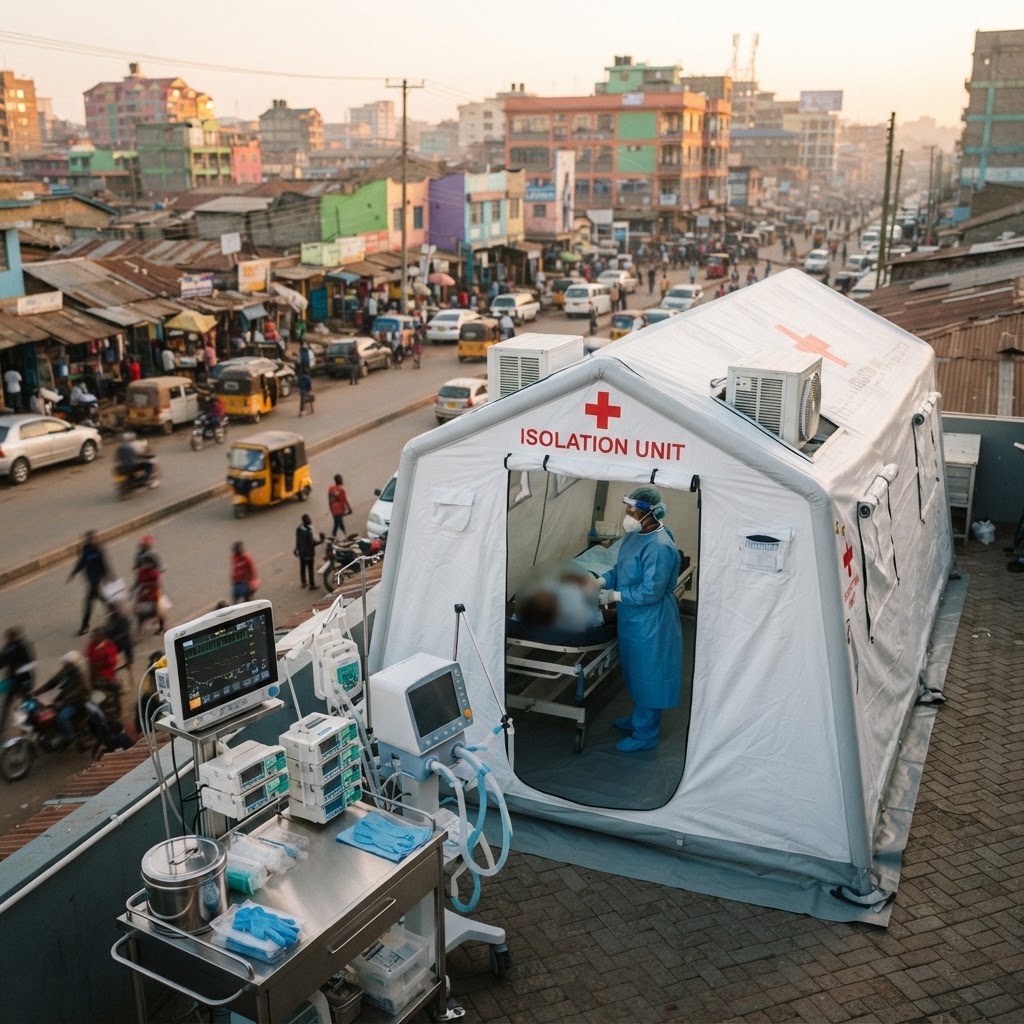

A fresh alarm has been sounded across the continent following the confirmation of an Ebola infection in Nigeria. The development marks the beginning of what public health officials fear could be an expansive new outbreak. Given Nigeria’s status as a primary nexus for continental transit and commerce, the news has prompted immediate scrutiny from medical authorities throughout the SADC region. For South Africa, the emergence of this pathogen serves as a stark reminder of the fragile nature of regional health security. The threat of viral importation is a reality that necessitates immediate strategic foresight. While the geographical distance between Lagos and Johannesburg is vast, the connectivity of modern travel networks ensures that infectious diseases can traverse these distances with alarming speed. Our local health infrastructure is now on heightened alert. The Department of Health is expected to recalibrate existing protocols to ensure that every port of entry remains a robust line of defense. Previous experiences with epidemic management have taught our officials that transparency and rapid detection are the only ways to prevent local contagion. Economic integration, while a pillar of our national development, complicates the containment process. Nigeria functions as a central hub for business travelers and migrants alike. A surge in the virus could potentially disrupt supply chains and force a re-evaluation of current cross-border movement policies. Business leaders are watching the situation with cautious eyes, fearing that travel restrictions might return if the situation worsens. Beyond the economic implications, the public health sector must weigh its capacity. South Africa has made significant strides in epidemiological surveillance since the last major Ebola crisis, yet the intensity of an outbreak in a dense metropolitan area like Lagos presents a unique challenge. Coordination with the World Health Organization and regional partners is currently in high gear to map the transmission routes. It is essential that our public messaging remains consistent. Panic is not the answer, but complacency could be catastrophic. The scientific community is urging the public to stay informed through official government channels rather than social media speculation. Vaccination strategies and rapid testing supplies are being prioritized to ensure that if a case were to reach our borders, the response would be instantaneous. Vigilance remains the cornerstone of our defense. South Africans should take comfort in the fact that our surveillance systems are significantly more advanced today than they were a decade ago. However, the virus is a formidable foe that exploits gaps in policy and communication. As the continent watches Nigeria navigate this crisis, Pretoria must maintain an unwavering commitment to the safety of its citizens. The weeks ahead will require patience, rigorous adherence to international health standards, and a unwavering commitment to regional cooperation to ensure that this outbreak does not gain a foothold in Southern Africa.
About the Author
Fatima Mokoena
Staff Reporter
Fatima Mokoena reports for National Post UK with a focus on rigorous analysis and authoritative journalism — a trusted voice across British public life.
Reader Discussion · 4
Subscribers can join the conversation.
SUBSCRIBE TO COMMENT →It is absolutely vital that the international community provides the necessary resources now rather than waiting for it to spread further. Prevention is always cheaper than the alternative, and our globalised world means no one is truly isolated.
Is it not time we stopped relying on reactive measures? We see these warnings every few years and yet the infrastructure for rapid vaccine distribution across the region still seems woefully inadequate.
I lived in Lagos for three years and understand just how complex transit hubs are to monitor. You simply cannot screen everyone effectively when millions are passing through daily; I fear this may be much harder to contain than the previous waves.
Given how well Nigeria managed the 2014 outbreak, I suspect they have the protocols in place to contain this fairly quickly. It is sensible for neighbouring countries to be vigilant, but there is no need for mass panic at this stage.