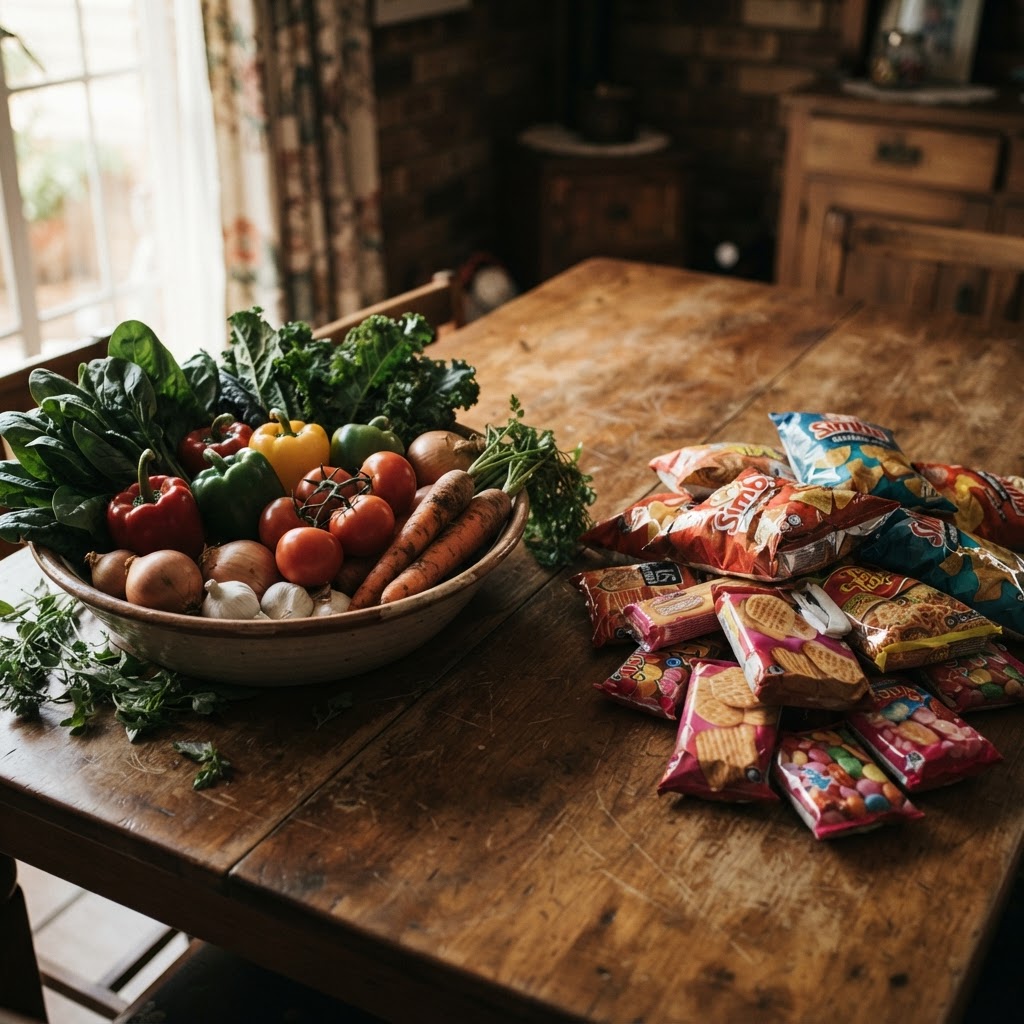
Across South Africa, a silent emergency is unfolding inside the shopping bags of millions. For many households, the struggle is no longer just about securing enough calories to stave off hunger, but about the terrifying, widening chasm between what is affordable and what is actually nutritious. The nation is trapped in a nutritional paradox where the most accessible options are often the most harmful. As inflationary pressures squeeze household budgets, the demographic impact is clear: our communities are being fed, but they are not being nourished. This is not merely a matter of personal dietary preferences; it is a systemic economic crisis playing out on our dinner plates. When fresh vegetables, fruits, and lean proteins become luxury items, low-income families are systematically pushed toward highly processed, shelf-stable goods. These alternatives are designed to be cheap and filling, but they are frequently devoid of the essential vitamins and minerals required for long-term health. The consequences of this forced shift are already manifesting in the rising prevalence of metabolic conditions and lifestyle diseases that are placing an unprecedented strain on our public health sector. Alef Meulenberg of Rhiza Holdings, who works closely with community support initiatives, points out that the common critique of 'poor lifestyle choices' is deeply misplaced. Instead, we are observing a rigid economic architecture that restricts the options available to the working class. Existing state-led feeding schemes often fall short, focusing on volume rather than the quality of intake. Relying on simple caloric distribution without considering nutritional density represents a missed opportunity to build a resilient population. The reality is that the financial stress of current living standards in South Africa leaves little room for families to prioritize long-term preventative health. Every rand is accounted for, and when a bag of processed starch costs a fraction of fresh produce, the choice is made by the wallet, not the appetite. The implications for the future are dire. A generation raised on nutrient-poor diets faces a trajectory of increased susceptibility to chronic illness, which will inevitably translate into lower productivity and higher social costs for the state. If we do not address the disconnect between current food prices and the actual cost of healthy living, the country risks entrenching a cycle of poverty and poor health that will persist for decades. Addressing this will require more than just food aid; it demands an honest intervention in the food supply chain and a commitment to making nutrient-dense food a basic right rather than a premium experience. As the Daily Standard has tracked these economic trends, it is evident that the narrative of national food security is incomplete if it does not account for the quality of what is being consumed. We must transition toward policies that support local, fresh distribution networks and incentivize the availability of healthy staples for every South African household, regardless of their zip code.
About the Author
Thabo Ndlovu
Staff Reporter
Thabo Ndlovu reports for National Post UK with a focus on rigorous analysis and authoritative journalism — a trusted voice across British public life.
Reader Discussion · 5
Subscribers can join the conversation.
SUBSCRIBE TO COMMENT →I find it a bit reductive to frame this only through a lens of affordability. There is also a massive cultural shift toward convenience foods that needs to be addressed alongside the economic factors.
This is exactly why we need better education on nutrition and government intervention regarding food subsidies. Families want to eat healthily, but the cost barrier is currently insurmountable for far too many.
I spent time in Cape Town last year and the disparity is staggering. You walk into a supermarket and see cheap, calorie-dense rubbish lining the shelves while fresh produce is priced as if it were a luxury item.
While I agree the situation is dire, we must be careful not to place the blame entirely on individual choices. When people are struggling to make ends meet, they simply buy what keeps them full for the least amount of money.
It is a global crisis, not just one confined to South Africa. We see the same issue here with ultra-processed foods being cheaper than fresh vegetables, and it is inevitably leading to a health catastrophe.