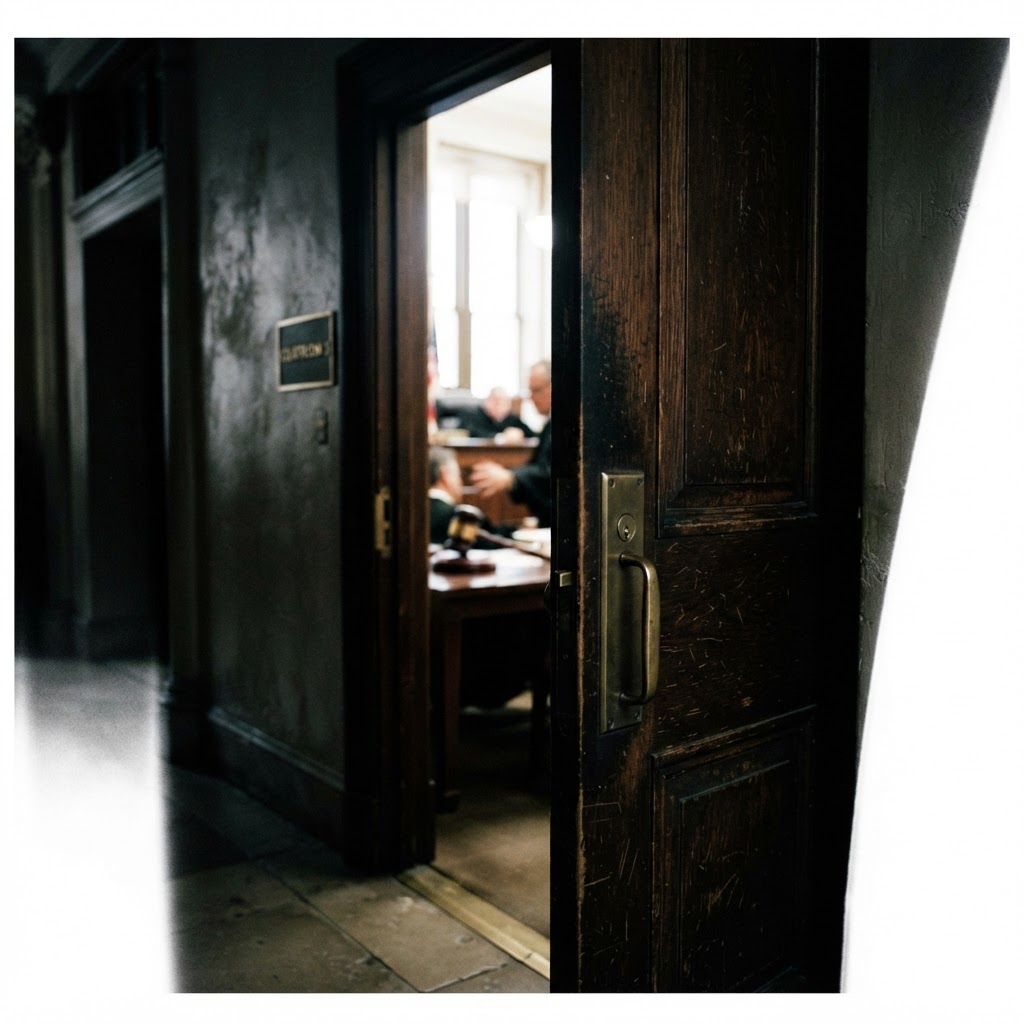
The Gauteng High Court delivered a profound victory for democratic accountability this week, firmly striking down an attempt by the State Security Agency (SSA) to shroud the prosecution of Thulani Dlomo in shadow. The court’s decision mandates that the trial of the former intelligence chief proceed with full transparency, ensuring that the legal proceedings regarding alleged state capture remain accessible to the citizens of South Africa. This ruling represents a stinging rebuttal to the executive branch’s growing inclination to invoke national security as a veil for administrative misconduct. A diverse coalition of journalistic institutions, including the Mail & Guardian and investigative outfit amaBhungane, spearheaded the legal challenge, arguing that the public interest in the integrity of the intelligence sector far outweighs the state’s demand for confidentiality. By refusing to seal key evidentiary documents, the bench has signaled that the era of institutional impunity within the security services must come to an end. The controversy stems from Dlomo’s involvement in complex matters that have long haunted the SSA, an agency that has spent years attempting to repair its damaged reputation following the Zondo Commission’s damning findings. For years, the SSA has operated within a culture of silence, often weaponizing the concept of 'top secret' classification to evade the oversight required in a healthy constitutional democracy. This case is uniquely symbolic, as it forces the light of day onto the very machinery once accused of destabilizing our institutions for the benefit of private interests. Beyond the procedural victory for press freedom, the ruling serves as a vital test for the post-state capture judiciary. In South Africa, the intelligence services have often functioned as a law unto themselves, operating beyond the reach of traditional civilian control. By opening the courtroom doors, the Pretoria High Court is not merely adjudicating a single trial but is reaffirming the principle that no state functionary is immune to public examination. Advocates from the Campaign for Free Expression have rightly characterized the decision as a watershed moment for governance. They argue that if the intelligence services are to ever regain the trust of the populace, they must subject themselves to the rigorous scrutiny that accompanies our legal tradition. Transparency is not a luxury; it is a prerequisite for a government that serves the people rather than its own internal factions. For the ordinary South African, who has seen billions of rand siphoned away by corrupt syndicates linked to high-level officials, this decision offers a rare glimpse into the mechanics of accountability. We are moving away from the era where 'classified' stamps were used to protect the guilty and toward a system where evidence is debated openly in the public domain. The fight for access to the Dlomo trial underscores the essential role played by independent media in protecting our constitutional order. Without the persistence of organizations like amaBhungane and the Mail & Guardian, the state might have successfully maneuvered this case behind closed doors, potentially burying evidence of systemic rot. As the trial proceeds, the eyes of the nation will finally be permitted to observe the proceedings directly. This ensures that the justice system remains tethered to the expectations of the public, proving that in this democracy, the pursuit of truth is a fundamental right that the state cannot arbitrarily revoke.
About the Author
Fatima Mokoena
Staff Reporter
Fatima Mokoena reports for National Post UK with a focus on rigorous analysis and authoritative journalism — a trusted voice across British public life.
Reader Discussion · 5
Subscribers can join the conversation.
SUBSCRIBE TO COMMENT →The State Security Agency has been operating in the dark for far too long. I welcome this oversight; it is high time they were held accountable for their actions.
It feels like we have been hearing about this case for years without any real resolution. Hopefully this ruling speeds things up, as the constant stalling is becoming a joke.
This is a significant win for the rule of law. If Dlomo has nothing to hide, he should not fear an open trial, regardless of his former position.
I am not entirely convinced that open court is appropriate when national security is at play. We risk exposing sensitive methods that could put our own agents in real danger.
About time the courts put their foot down. Transparency in these high-level security cases is the only way to ensure the public maintains any semblance of faith in our intelligence services.